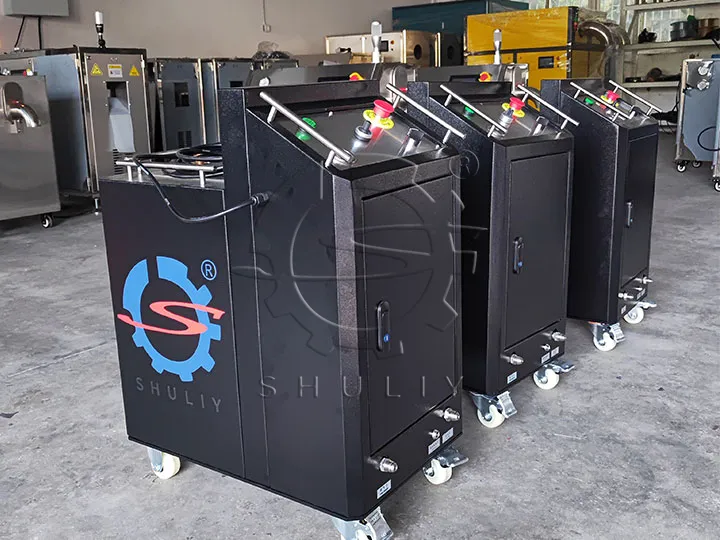
A dry ice blasting machine uses compressed air to accelerate dry ice pellets toward a surface, removing dirt, grease, carbon deposits, and other stubborn contaminants. It is used in many industries, including rubber manufacturing, automotive production, food processing, printing, and power generation.
So, what can you clean with a dry ice cleaning machine? Let’s look at its main applications and advantages.
1. What Can You Clean with a Dry Ice Blasting Machine?
Rubber and Plastic Manufacturing Equipment
Rubber and plastic production equipment can accumulate rubber residue, plastic deposits, and other contaminants during operation. Dry ice blasting can help clean molds, production machinery, and selected components without using water or conventional chemical cleaning agents.
Automotive Parts and Equipment
In the automotive industry, dry ice blasting can remove grease, oil, carbon deposits, and dirt from suitable engine components, molds, and manufacturing equipment. It is also used for cleaning certain vehicle components where water-based cleaning is not preferred.
Foundry Equipment
Foundries often deal with sand residue, carbon deposits, and other stubborn contaminants. A dry ice blasting machine can help clean molds, tooling, and selected production equipment, reducing the need for extensive manual scrubbing.
Printing Equipment
Ink residue and accumulated dirt can affect printing equipment during production. Dry ice blasting can clean suitable rollers, machine components, and other areas where conventional cleaning methods may require more disassembly or drying time.
Food Processing Equipment
Dry ice blasting is used to remove grease, food residue, and other deposits from suitable food processing machinery. Because the cleaning process does not introduce additional water or leave solid abrasive media behind, it can help simplify certain cleaning tasks. Appropriate food-contact cleaning and sanitation procedures must still be followed.
Power Generation and Electrical Equipment
Dry ice blasting can be used to clean selected industrial electrical components and power equipment when the equipment and cleaning method are suitable. Proper isolation, material compatibility, and manufacturer recommendations are essential before cleaning.
Ships and Aircraft
In shipbuilding, maintenance, and aviation-related applications, dry ice blasting can remove selected coatings, grease, carbon deposits, and other contaminants from compatible surfaces. The method and operating parameters should be selected according to the material and cleaning requirements.
2. How Does a Dry Ice Blasting Machine Work?
Dry ice blasting combines compressed air, low-temperature dry ice pellets, and the impact of high-speed particles to remove contaminants.
The cleaning process generally involves three steps:
- Rapid cooling: Dry ice pellets strike the contamination, causing it to cool rapidly. The resulting temperature difference can make some deposits brittle and easier to detach.
- Impact and penetration: High-speed pellets reach the contaminated surface and help loosen deposits. The impact and thermal effects work together to break the bond between the contamination and the surface.
- Sublimation: After impact, the dry ice changes directly from a solid into carbon dioxide gas. This helps remove the contaminants without leaving solid blasting media behind.
The removed dirt and residue still need to be collected or cleaned up after blasting. Dry ice blasting also requires adequate ventilation because carbon dioxide can accumulate in enclosed spaces.
3. What Are the Advantages of Dry Ice Blasting?
Reduce Equipment Downtime
Dry ice blasting can clean suitable equipment without introducing cleaning water or additional abrasive media. In some applications, it can reduce disassembly and drying requirements, helping shorten maintenance time.
Remove Stubborn Contaminants
The combination of low temperature and particle impact helps remove certain deposits, including grease, carbon buildup, rubber residue, and process contaminants. Actual cleaning results depend on the type of contamination, surface material, and operating settings.
Reduce Secondary Waste
Dry ice sublimates into carbon dioxide gas during cleaning, so the process does not leave behind spent sand or other solid blasting media. However, the removed contaminants remain and must be handled appropriately.
Reduce Reliance on Chemical Cleaning Agents
Dry ice blasting can replace certain chemical-based cleaning methods, depending on the application. This may reduce chemical handling and residue concerns, although appropriate protective equipment, ventilation, and operating procedures are still necessary.
4. Is a Dry Ice Blasting Machine Suitable for Your Industry?
A dry ice blasting cleaning machine can be considered for a wide range of cleaning tasks, including:
- Rubber and plastic molds
- Automotive components and production equipment
- Foundry molds and tooling
- Printing machinery
- Food processing equipment
- Selected electrical and power equipment
- Shipbuilding and aviation maintenance equipment
Before selecting a dry ice blasting machine, consider the type of contamination, the material being cleaned, the required cleaning speed, the available compressed air supply, and the size of the parts or equipment.
Not every surface or contaminant is suitable for dry ice blasting. Testing a representative area before full-scale cleaning is recommended.
5. Choose the Right Dry Ice Blasting Machine
Our dry ice blasting machine is designed for industrial cleaning applications where removing stubborn contaminants and reducing cleaning downtime are important considerations.
To help select a suitable model, we recommend evaluating your cleaning target, contamination type, operating conditions, and compressed air requirements.
Contact us to discuss your application and find a suitable dry ice blasting solution for your equipment and production needs.